
Cryotherapy or ice?

Clinical differences, the limitations of ice and the importance of temperature control

Applying cold is one of the most common therapeutic strategies for managing acute musculoskeletal injuries. For decades, ice has been a simple and readily available tool for alleviating pain, swelling and inflammation following trauma, overuse or surgery. Its ease of use and immediate availability have made it a popular solution in both sports medicine and home injury management.

However, in recent years, advances in medical technology have led to the development of cryotherapy systems that apply cold in a more precise and stable manner. This has raised an important issue in modern rehabilitation medicine: to what extent is ice an adequate solution in a clinical setting, and what are the advantages of systems that allow for more precise temperature control?

Understanding these differences is essential for doctors, physiotherapists and rehabilitation professionals who wish to use cryotherapy effectively and safely.

The physiological rationale of cryotherapy

The therapeutic effect of cryotherapy primarily stems from the reduction in tissue temperature. Cooling causes local vasoconstriction, temporarily reducing blood flow in the treated area and helping to limit oedema formation during the acute phase of inflammation. At the same time, the cold reduces the speed of nerve conduction, producing an analgesic effect that can reduce the perception of pain.

Another physiological effect is the reduction in cellular metabolism in injured tissues, which can help to limit secondary damage in the early stages of a muscle or joint injury. These mechanisms have been extensively described in the scientific literature and form the rationale underlying the use of cryotherapy in sports medicine and orthopaedic rehabilitation.¹²

However, for these effects to be achieved, the temperature applied to the tissues must be maintained within an appropriate therapeutic range for a sufficient period of time. It is precisely in relation to this aspect that the main differences between the use of ice and controlled cryotherapy systems emerge.

The main limitation of ice is the lack of temperature control: when cooling is achieved through the application of ice, the actual temperature reached by the tissues cannot be precisely controlled. Ice initially has a temperature close to 0 °C, but the actual cooling that occurs in the tissues depends on numerous physiological and environmental factors.

These include the thickness of the adipose tissue, the type of application used, the presence of compression, the duration of treatment, and even the temperature of the surrounding environment. Furthermore, during treatment, the ice melts progressively, leading to a gradual rise in temperature and consequent reduction in cooling capacity.

Several studies have shown that skin temperature during ice application can vary considerably between patients and between different application methods, making it difficult to achieve consistent and reproducible cooling.³ This variability is one of the main limitations of using ice in a clinical setting.

The progressive loss of efficacy during treatment is another limitation of using ice. Since cooling depends on the presence of solid ice, the ability to remove heat from the tissues gradually decreases as the ice melts.

This leads to a gradual reduction in cooling intensity during the session, resulting in decreased therapeutic efficacy over time. In practice, the cold applied to the tissues does not remain constant, but tends to diminish progressively, particularly during longer applications or on larger body surfaces.

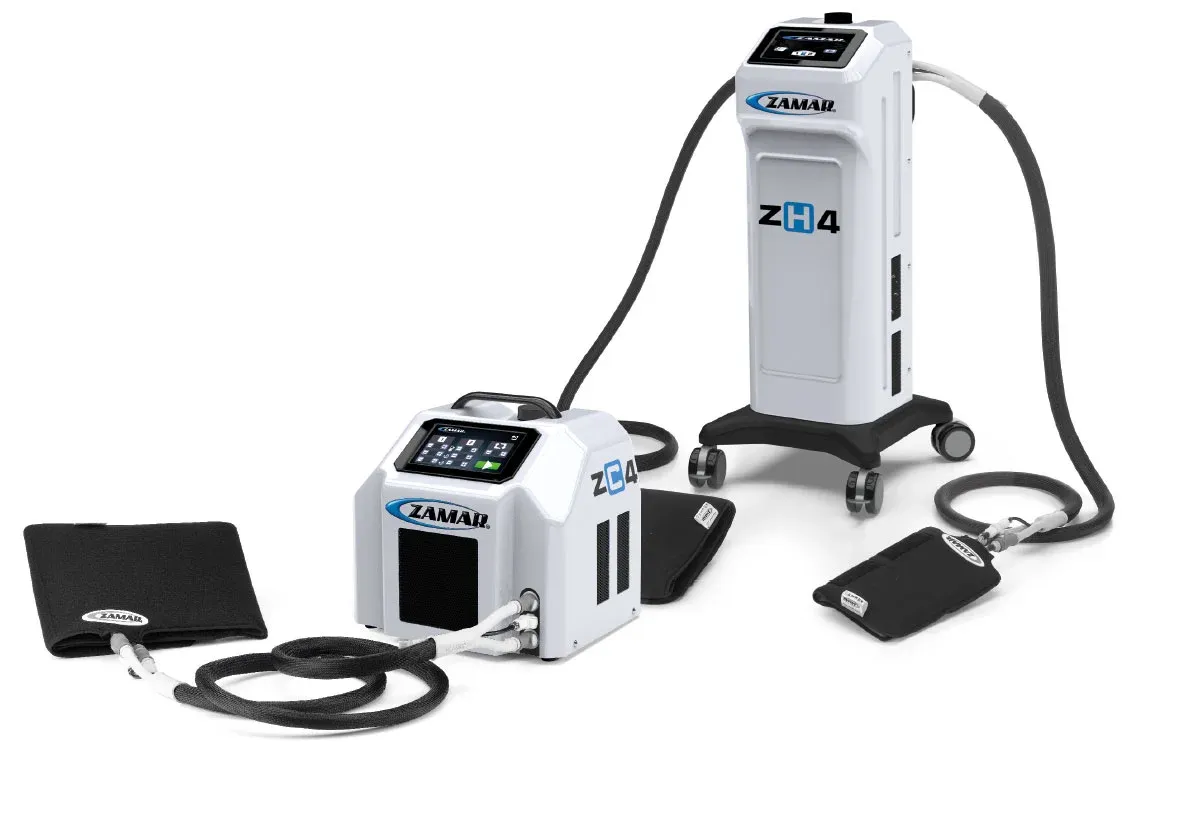
Controlled cryotherapy systems, on the other hand, are designed to maintain the set temperature throughout the treatment thanks to continuous heat exchange systems. This feature enables cold to be applied in a more stable and predictable manner, ensuring the treatment is consistent with structured therapeutic protocols.⁴

Another aspect to consider is the risk of cold-induced skin injuries, commonly known as cold burns. Although ice is generally considered a safe therapy, improper application can cause skin damage, particularly when ice is applied directly to the skin or for excessive periods of time.

The risk is further increased in patients with reduced skin sensitivity or impaired peripheral circulation. Several cases of skin injuries associated with the improper use of ice have been described in the literature, particularly in sporting or domestic contexts where treatment is not monitored by healthcare professionals.⁵

Controlled cryotherapy devices help to reduce this risk by enabling specific temperatures to be set and maintained and by distributing cooling evenly across the treated area.
Standardising treatment protocols in the clinical setting is fundamental to ensuring safety, repeatability, and monitoring therapeutic outcomes. However, when cooling is achieved using ice, it becomes difficult to precisely define parameters such as the temperature actually applied to the tissues, the intensity of the cooling, and the stability of the therapy over time.

This variability makes it difficult to define repeatable and comparable therapeutic protocols across different patients or between different treatment sessions. Controlled cryotherapy systems, on the other hand, allow precise parameters to be set, such as the temperature and duration of treatment. This enables greater standardisation of therapy and better integration into rehabilitation programmes.

Conclusion

In conclusion, ice is a simple and readily available tool for applying cold in the early stages of an injury or muscle strain. However, from a clinical perspective, ice has several limitations, including the difficulty of controlling temperature, progressive loss of efficacy during treatment, potential risk of cold-induced injury and lack of standardisation in treatment protocols.

Advances in cryotherapy technologies have enabled the development of systems that can apply cold in a more precise, stable, and controlled manner. In the context of modern rehabilitation medicine, accurately managing the temperature and duration of treatment is an important factor in improving therapy’s safety and efficacy.

Scientific sources

  1. Bleakley C.M., Costello J.T.
    Do thermal agents affect range of movement and mechanical properties in soft tissues?
    Physical Therapy in Sport. 2013.
  2. Knight K.L., Draper D.O.
    Therapeutic Modalities: The Art and Science.
    Lippincott Williams & Wilkins.
  3. Bleakley C.M., McDonough S.M., MacAuley D.C.
    The use of ice in the treatment of acute soft-tissue injury.
    American Journal of Sports Medicine. 2004.
  4. Waterman B.R. et al.
    Cryotherapy in the postoperative setting.
    Journal of the American Academy of Orthopaedic Surgeons. 2012.
  5. Collins N.C.
    Is ice right? Does cryotherapy improve outcomes for acute soft tissue injuries?
    Emergency Medicine Journal. 2008.

REQUEST INFORMATION

Privacy Policy