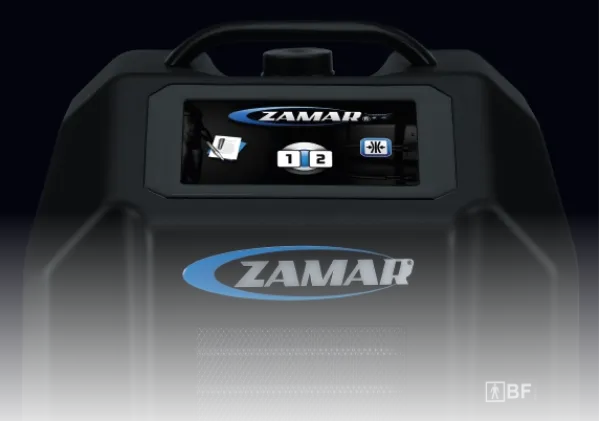
The Technology Behind Zamar:
How a Medical Refrigeration System Powers Cryocompression
Latest Article
Cryocompression is one of the most effective therapies for treating pain, inflammation, and post-operative recovery. At the heart of Zamar’s technology is an advanced refrigeration system that provides precise, continuous, and safe cooling. But what exactly powers this technology? Let’s find out together.
The Core: The Refrigeration Cycle
A refrigeration system is designed to transfer heat from a lower temperature environment to a higher temperature one—essentially cooling the desired area. This process goes against the natural direction of heat flow (which moves from hot to cold), and therefore requires external energy, usually in the form of electricity.
This is made possible through phase changes of a refrigerant gas. The gas is compressed (increasing pressure = heat), then expanded (cooling down) to absorb heat from the surrounding environment (lower temperature = cryotherapy), in a closed cycle. This cycle can also be reversed (cycle inversion) to produce the opposite effect—releasing heat to the environment (raising temperature = thermotherapy).
This mechanism allows for extremely precise temperature control, which is crucial for both the safety and effectiveness of medical cryotherapy.
In Zamar systems, all components work in synergy to cool (or heat) the ZAMAR fluid, which circulates through thermal wraps and exchanges thermal energy with the patient. The temperature can be set between 0°C and 45°C (depending on the model) and remains stable throughout the treatment.
A Note on Efficiency and Power
Refrigeration systems are widely used in commercial and industrial settings due to their high energy efficiency. The average performance coefficient (COP) is around 3:1 meaning for every watt of electricity consumed, 3 watts of thermal output are produced. This allows ZAMAR to offer the most powerful cryotherapy devices on the market.
Discover more advantages of cryotherapy in our article: “The Power of Cryotherapy: Advantages and Benefits for Recovery and Wellness“
Why Is It Better Than Ice?
Ice has an uncontrollable temperature, which can be too low and cause tissue damage. It also warms up quickly, reducing its effectiveness.
Zamar systems, on the other hand, maintain a stable and adjustable temperature, avoiding the risk of cold burns and ensuring much longer therapeutic sessions.
The Zamar system uses neither ice nor water but instead relies on thermodynamic principles via refrigeration systems. This enables:
- Continuous and stable treatment
- No need to replace ice packs or water
- Maximum hygiene thanks to a completely sealed and isolated system
The Power of Compression
The Zamar system also integrates pneumatic compression, which offers several clinical benefits:
- Improves venous return
- Stimulates lymphatic drainage
- Reduces swelling and edema
- Enhances the effectiveness of cold by maintaining better contact with the tissues
This synergy makes Zamar cryocompression a comprehensive therapeutic solution, especially suited to orthopedic, post-surgical, and sports applications.
Clinical Applications
Zamar is successfully used in:
- Post-operative treatments (hip, knee, and shoulder prosthetics)
- Sports rehabilitation
- Acute and chronic pain management
- Home physiotherapy
- Aesthetic medicine and dermatology (to control post-procedure inflammation)
Efficiency and Precision: The Value of Digital Control
Zamar allows for precise control of temperature and pressure via an intuitive digital interface. This ensures:
- Safety: treatments stay within safe therapeutic parameters
- Personalization: each patient receives a tailored protocol
- Documentation: parameters can be recorded for clinical monitoring
Zamar technology has been adopted by orthopedic clinics, rehab centers, and professional sports teams for its measurable and consistent benefits.
Conclusion
Zamar technology adapts industrial-grade systems for medical use, providing high efficiency, safety, and precision in next-generation therapy. It’s a perfect example of how engineering can concretely improve the quality of care.